极限挑战
Can US afford cost of clean-energy protectionism in race for AI capabilities?_我的网站

A | 新加坡素来被称作是“花园城市”。
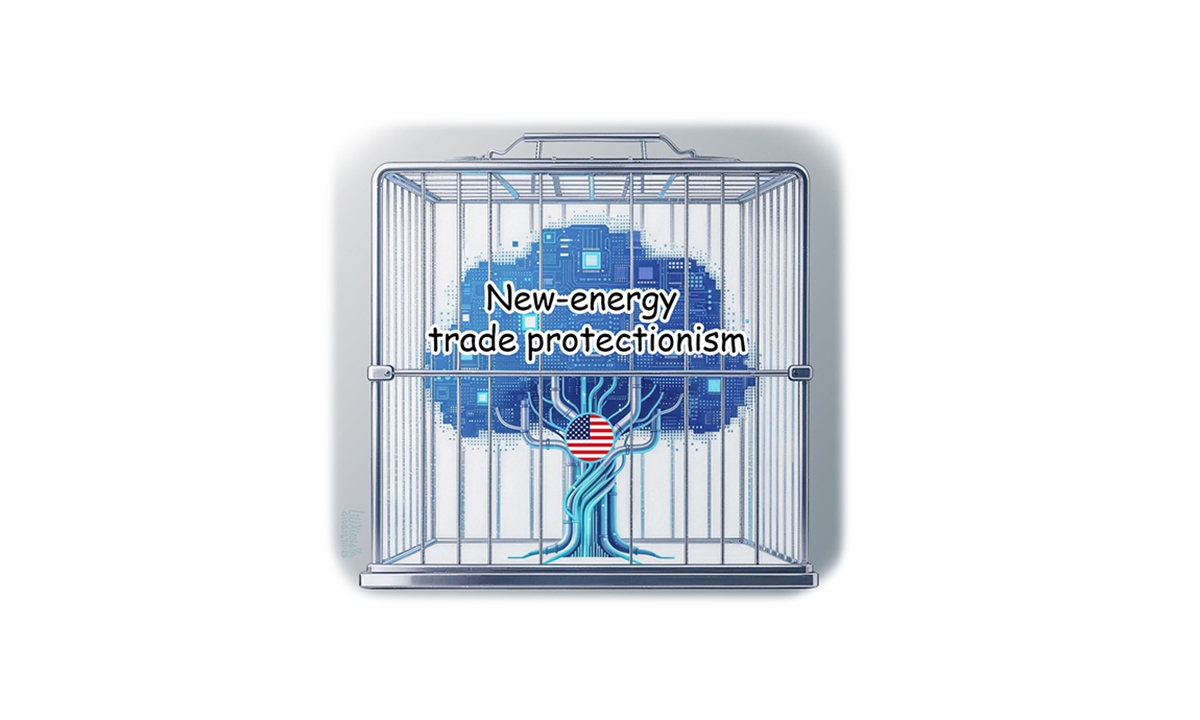
Recent media reports have questioned whether a natural gas plant built to power an Amazon data center project in Texas could become the largest climate polluter in the US. The controversy, whatever the eventual outcome, offers a reality check for America's artificial intelligence (AI) drive.
It exposes a growing contradiction: The US is racing to expand its AI capabilities, yet its protectionist trade policies are making it harder and more costly to access some of the clean-energy technologies needed to sustain that expansion. This raises a broader question: Can an energy-intensive AI race afford the costs of renewable energy protectionism?
The US is entering a new era of rising electricity demand. Data centers, the backbone of the AI economy, are emerging as one of the fastest-growing sources of power consumption. Much of that demand is still being met by fossil fuels: The International Energy Agency reports that natural gas supplies more than 40 percent of the electricity used by data centers in the US, making it their largest source of power.
So, it's not surprising that the expansion of data centers has raised concerns over their environmental impact and the pressure they could place on local power systems and electricity bills. A Gallup survey conducted in March found that seven in 10 Americans opposed the construction of AI data centers in their local area, including 48 percent who strongly opposed such projects.
The findings point to a broader challenge for the US: The race to develop AI is increasingly becoming a race to meet growing energy needs. Addressing this challenge will require more than advances in computing technology; it will also depend on an energy system capable of delivering large amounts of reliable, affordable and cleaner power. That, in turn, will require faster development and broader deployment of clean-energy technologies, from solar power to energy storage.
Yet in the clean-energy sector, the US has increasingly relied on protectionist trade measures that limit access to cost-competitive products from global markets. The country has placed greater emphasis on expanding domestic manufacturing capacity, but rebuilding entire clean-energy supply chains at home is a costly and time-consuming process. Even if expanded domestic production is achieved, it is likely to come at a higher cost, making the deployment of renewable technologies more expensive and potentially slower.
The solar industry offers a clear illustration of this policy direction. The US has continued to expand trade barriers in the sector. Reuters reported that the US government announced on Thursday a series of price floors and a 15 percent tariff on products made from polysilicon, a raw material used in solar panels.
The challenge lies in the limited scale of the US polysilicon industry. Reuters reported that the country has two polysilicon factories. Against this backdrop, relying on domestic polysilicon production while restricting access to imports runs counter to the goal of expanding solar power in the US. The country risks creating barriers that ultimately constrain its own access to the global supply chains needed for growth.
The pressing issue for the US is the speed at which new power demand is emerging. The expansion of data centers is creating electricity needs that cannot wait for domestic clean-energy capacity to develop gradually. Global supply chains can provide the scale and speed required in the near term. By narrowing access to these sources, the US risks turning clean-energy policy into a drag on the infrastructure needed for its AI race.
The US has placed AI high on its economic and technological agenda. The outcome of this race will matter greatly, as financial markets are also watching whether America can turn its AI efforts into commercial success.
This leaves the US with a difficult choice: Can it afford the cost of clean-energy protectionism while racing to build AI infrastructure? The answer may be no. Trade barriers that limit access to competitive renewable technologies could ultimately become a constraint on the AI expansion that Washington is seeking to accelerate.
The author is a reporter with the Global Times. [email protected]
。

B | 在新加坡各地区,甚至是组屋区附近,经常就能看到自然景点和繁华的绿洲。组屋旁的碧山-宏茂桥公园,图源:新加坡公园局但是,要是你认为已经去过了新加坡所有自然保护区和公园,那就大错特错!新加坡这些刚刚新建和即将建成的公园,是很适合步行或骑车的路线!肯定能给不再那么兴奋的你带来不一样的惊喜~ 已经建成的项目现在就可以去!01 新加坡东部走廊亮点:连接白沙公园和东海岸公园的18公里长通道 图源:见水印东部走廊由2021年起逐步开通的公园连道组成,于今年2月竣工,全长18公里,连接沿途8个不同的公园和户外休闲场所。这是国家公园管理局一项名为“自然之城”的倡议的一部分。

C | 到2030年,他们的目标是让每个家庭都能步行10分钟就能到达一处公园。在这里,大家能沉浸在各种大自然的体验,包括到淡滨尼生态园(Tampines Eco Green)观鸟、到访太阳广场公园(Sun Plaza Park)的康疗花园,以及到东海岸公园进行体育活动。图源:新加坡公园局02 新加坡巴西班让公园连道亮点:连接拉柏多自然保护区和西海岸公园的风情之旅 图源:FB@Ng Eng Hen新加坡南部山脊连成片的地区更多了!2023年年底,巴西班让公园连道的一段新的2.2公里路段正式开放,可以直通西海岸公园了~现在,新加坡南部地区总共13个公园被连接成一条徒步或自行车道。其中,巴西班让公园连道的建设元素就是附近的港口码头。大家在由改造集装箱建造的各种避难所中寻找阴凉处,并欣赏大炮和锚等航海文物。

D | 图源:新加坡公园局03 波那维斯达社区活动中心 亮点:隐藏在写字楼中间的自然公园图源:见水印Buona Vista社区活动中心于2024年4月开放,占地1.6公顷,位于备受喜爱的老铁路走廊沿线。位于Metropolis和Elementum商业中心办公楼之间,没有什么比远离喧嚣朝九晚五的自然保护区更让人期待的了!这里有适合孩子们一起玩耍的儿童游乐场,完美和周围的大自然融为了一体:图源:URA也有适合成年人和乐龄人士运动锻炼的综合健身区:图源:8视界还有500平方米的大草坪被当做灵活户外活动空间,来这里野餐也是很棒的~图源:8视界新加坡公共场合不是随处都允许涂鸦的。但来到这个坐落在天底下的街头艺术空间,或许就不是问题了!图源:8视界沿路走过,可以欣赏到种植在这里的名贵花草,包括了石龙刍和蒲草。将大自然和市政建设合为一体,这里种植的植物,还可以收集路面上平时无法吸收掉的多余雨水,免得这一带一到雨天就变成一片泽国哦~图源:URA04 滨海湾花园翠鸟湿地亮点:滨海湾公园里的新景观,可免费入场 图源:滨海湾花园翠鸟湿地Kingfisher Wetlands是一个占地15000平方米的保护区,种植了200多棵本土红树林。

E | 这个自然保护区不仅可以免费进入,大家还能看到可能在自然里才能见到的潺潺流水,数不清的植物和野生动物物种在3 区域繁衍生息。对了!连新加坡前总理李显龙,也曾在休假的时候,来过这里打卡哦~图源:李显龙脸书05 武吉甘柏公园亮点:蝴蝶园、狗狗友好 图源:8视界武吉甘柏多山,每座山丘都形成一座公园,依山而建,各具特色。最新的武吉甘柏公园,2021年9月正式开放,算是社区里很新的景点。整座公园就是一座小山,沿着400米的山丘步道可以绕行一圈, 上山头种植约1500棵树和30种花类,沿途设有遛狗场、健身设施等等,还有开放给公众租来进行园艺的社区花园。 图源:CNA走到最高处是一个蝴蝶花园,蝴蝶在花草间飞舞,放眼可俯瞰山下组屋区与大片山坡绿地。连同附近小桂林一带的武吉巴督镇公园,以及武吉巴督自然公园及蔡厝港公园连道轻松步行,穿梭邻里,大家可以往来于各园区间,探索不一样的自然休闲风情。图源:新加坡公园局06 巴西班让公园亮点:带沙地的自然游乐花园 在巴西班让公园连道之前,来巴西班让公园玩吧!园内的沙质地形,让人不禁想起想起该地区的海岸线。

F | 迎接您的将是一个自然游乐花园,园内提供互动设备供孩子玩耍,走道旁还有酷炫的海洋文物雕塑。 图源:见水印07 乌敏岛Coastal Arboretum亮点:拥有70多种本土物种的红树林 图源:新加坡公园局沿海林园(coastal arboretum)占地约一公顷。园内将种有约70个本地沿海树木品种,其中包括海红胶木(Sea Tristania)、大叶箣柊(Damak-damak Tahun)等濒临绝种的植物。

G | 新林园将与现有的红树林园(mangrove arboretum)相辅相成,成为学生和学者研究岛上生态多样性的宝贵资源。图源:CNA08 裕廊湖公园漂浮湿地亮点:新加坡最大的人造漂浮湿地 图源:新加坡公园局裕廊湖湖畔花园项目是新加坡第三个国家级花园,如今已经成为新加坡市民最受欢迎的公园之一。本次人工漂浮湿地位于裕廊公园内,占地3850平方米,是新加坡公用事业局ABC水资源治理计划的最新建成项目。设计旨在最大限度地利用裕廊湖水体,创造不同于陆地的景观空间体验,设计通过宽敞的景观长廊和木栈道为游客提供更加广阔的视野,并且可以近距离观察湿地风景和野生动物。图源:Sunny City Kids游客和居民可以在这里参与皮划艇和龙舟等水上活动,也可以静静欣赏数不清的水生植物。图源:海峡时报09 Tropical Montane Orchidetum亮点:植物园内的胡姬花绿洲。
Current article:http://cttwwr.tandianxiuzhutiaoshoudiamei.pics/news/20260826_4966.html
Published on:12:18:33


